A single spin on a cascading slot can trigger a dozen consecutive wins before the reels ever stop moving - and that chain reaction is precisely what separates Mahjong Ways 2 from ordinary payline slots. Built around a tile-matching theme and an 8,192-ways-to-win engine, this title has become a reference point for players comparing volatility profiles across the cascading-slot category. It rewards patience over impulsive spinning, and its mechanics reward players who understand what they're actually looking at on the reels.
What makes the game worth dissecting isn't just its aesthetic - soft lantern glow, painted tile symbols, a calm musical backdrop - but the mathematical architecture underneath. Multipliers stack. Wilds expand. Free spins compound. Anyone researching mahjong ways 2 features before committing real money will find a system deliberately engineered to produce long dry spells punctuated by explosive payouts. That's not a flaw; it's the design philosophy of high-volatility cascading slots, and understanding it changes how you approach bankroll management entirely.
This piece breaks down the mechanics layer by layer: how the reels function, what triggers bonus rounds, how the multiplier system behaves under pressure, and why the RTP figure alone tells only part of the story. By the end, you'll know not just what the game does, but why it does it.
What Is Mahjong Ways 2
Mahjong Ways 2 is a cascading-reel video slot themed around traditional mahjong tiles, positioned as a sequel to an earlier title that established the core formula. Rather than fixed paylines, it uses a "ways" system across a 5x4 or 5x5 grid - the row count on the middle reels can expand, physically increasing the number of ways to win mid-spin. This structural detail is what separates it from conventional slots and explains why symbol combinations feel more frequent and more dynamic.
Origins and Positioning in the Slot Market
The game sits within the Asian-themed cascading-slot niche, a category that grew rapidly once developers realized that combining cultural iconography with mechanically aggressive win systems appealed to a broad international audience. Mahjong Ways 2 refined the pacing and volatility balance of its predecessor, tightening the bonus round structure and adjusting symbol payout tiers.
Core Symbols and Their Roles
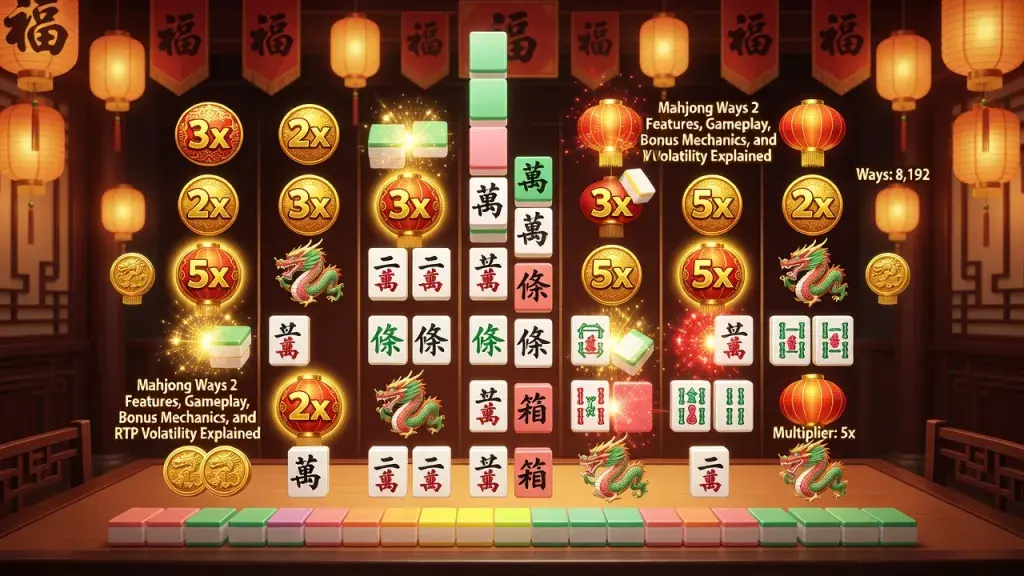
Tile symbols are split into low-value (colored suits) and high-value (character-based) categories, with the wild symbol substituting for everything except the scatter. Scatters - represented by a gold coin or lantern icon depending on the build - trigger the free spins feature once enough appear on the grid in a single spin sequence.
- Low-tier symbols: simplified tile suits offering modest but frequent payouts
- High-tier symbols: character and dragon tiles with significantly higher multipliers
- Wild symbol: substitutes broadly and often carries its own multiplier value
- Scatter symbol: the sole trigger mechanism for free spins
Mahjong Ways 2 Gameplay Mechanics
The gameplay loop follows a cascade structure: a spin resolves, winning symbols disappear, new symbols drop in from above, and the process repeats until no further wins form. This is standard for the genre, but Mahjong Ways 2 gameplay adds a distinct twist through its expanding reel mechanic, where each cascade has a chance to add an extra row to reels two through four.
The Cascading Win System
Every cascade that produces a win keeps the multiplier meter active, and successive cascades within the same spin sequence accumulate toward higher payout potential. A single spin can theoretically cascade five, six, or more times before the sequence dies out, and each additional cascade increases the perceived momentum of the round even when the underlying probability of continuation drops with each step.
Expanding Reels and Row Growth
Unlike static-grid slots, the middle three reels here can grow from four rows to five as wins occur, directly expanding the ways-to-win count from a base figure up toward the maximum of 8,192. This isn't cosmetic - it materially changes the odds mid-spin, meaning a cold start can evolve into a wide, high-probability grid before the sequence terminates.
Bet Structure and Stake Flexibility
Stakes typically scale across a wide range, letting cautious players test the volatility with minimal exposure while allowing others to chase the bonus round aggressively. Given how central variance is to this title, adjusting bet size according to session bankroll matters more here than in low-volatility alternatives.
Mahjong Ways 2 Features Breakdown
The feature set is where this title distinguishes itself from generic cascading slots. Multipliers aren't just decorative numbers - they interact with the wild system, the free spins mode, and the base game simultaneously, creating layered payout potential. Anyone comparing titles in this genre should look closely at mahjong ways 2 features before assuming all cascading slots behave identically, since the interaction between wilds and multiplier stacking here is notably aggressive compared to competitors. For a full technical rundown of these mechanics, mahjong ways 2 features are documented in detail on the official promo page, which outlines exact multiplier ranges and trigger conditions.
Multiplier Tile Mechanic
Multiplier wilds carry their own values, commonly ranging from 2x up to substantially higher figures during free spins. When multiple multiplier wilds appear in the same winning cascade, their values are summed rather than multiplied against each other, which shapes how quickly a round can escalate.
Wild Symbol Behavior
Wilds appear only in specific reel positions during the base game but become more prevalent during bonus rounds. Their substitution power combined with attached multiplier values makes them the single most influential symbol type in determining large wins.
Ante Bet and Feature Buy Options
Many builds of this title include an ante bet option that increases scatter frequency for a higher wager, alongside a bonus buy feature that lets players pay a lump sum to enter free spins directly. Both options fundamentally alter session variance and should be understood as separate risk profiles rather than shortcuts.
Mahjong Ways 2 Bonus Features and Free Spins
Bonus rounds are the primary vehicle for the game's largest payouts, and the mahjong ways 2 bonus features are structured to reward sustained engagement rather than single lucky spins. Triggering free spins typically requires landing three or more scatter symbols in one spin sequence, including symbols that appear during cascades.
Free Spins Trigger Conditions
Scatter count determines the initial number of free spins awarded, with additional scatters landing during the bonus round extending the session further. This retrigger mechanic is what allows exceptional bonus rounds to run considerably longer than the base allocation.
Multiplier Accumulation During Free Spins
During the bonus round, multiplier values from wild symbols often accumulate across the entire session rather than resetting between spins, depending on the specific rule set active. This accumulation is the mathematical engine behind the game's headline-grabbing maximum win potential, which can reach several thousand times the initial stake.
Bonus Round Pacing and Player Expectations
Free spins sessions can feel deceptively slow at first, with modest cascades building gradually before a late-session multiplier spike changes the outcome entirely. Recognizing this pacing pattern helps manage expectations rather than assuming an early cold streak predicts the final result.
Mahjong Ways 2 RTP and Volatility Explained
Return-to-player figures for this title generally sit in the mid-90s percentage range, consistent with other high-volatility cascading slots, though exact figures can vary slightly depending on the specific game configuration deployed by an operator. Understanding mahjong ways 2 RTP volatility requires separating two distinct concepts that players frequently conflate: RTP measures long-run theoretical return, while volatility measures the distribution and frequency of that return.
How RTP Is Calculated and Why It Varies
RTP is derived from simulated spin data across millions of rounds, representing a theoretical average rather than a guarantee for any individual session. Some operators offer alternate RTP configurations for the same game, meaning the figure displayed in the paytable should always be checked directly rather than assumed from general reputation.
Volatility Classification and What It Means in Practice
This title is classified as high volatility, meaning long stretches without significant wins are statistically normal, punctuated by rare rounds capable of returning several hundred or even several thousand times the stake. High volatility does not mean higher RTP - it means the same theoretical return is distributed unevenly, concentrated into fewer, larger payouts.
Bankroll Implications of High Volatility Play
Sessions on high-volatility titles demand larger bankroll buffers relative to bet size, since the statistical variance can produce dozens of consecutive non-winning spins before a bonus round appears. Players accustomed to low-volatility slots often misjudge this pattern, mistaking normal variance for a malfunctioning game.
- High volatility: fewer wins, larger potential payouts, longer dry spells
- Low volatility: frequent smaller wins, shorter dry spells, lower peak potential
- RTP: theoretical long-run return percentage, independent of volatility level
Strategic Considerations for Players
Approaching a high-volatility, feature-rich title strategically means accepting the mathematics rather than fighting them. No betting pattern changes the underlying RTP, but bet sizing and session length management directly affect how much variance a player actually experiences.
Bankroll Management for High-Volatility Slots
Allocating a larger number of betting units per session - often recommended at several hundred times the base bet - helps absorb the dry spells inherent to this volatility class. Reducing bet size rather than session count is generally the more sustainable adjustment when bankroll is limited.
Reading Paytables Before Committing Stakes
Every configuration of this game displays its exact RTP and maximum win potential in the paytable, and checking these figures before playing removes guesswork about which version is active on a given platform.
Setting Realistic Win Expectations
Given the compounding nature of the multiplier system, exceptional wins are statistically rare events rather than expected outcomes of regular play. Framing sessions around entertainment value rather than guaranteed profit aligns expectations with the actual probability structure of the game.
Frequently Asked Questions
Is Mahjong Ways 2 based on the original Mahjong Ways?
Yes, it's a direct sequel that keeps the core tile theme and ways-to-win system while refining the bonus round structure, multiplier mechanics, and reel expansion feature introduced in the original.
What is the maximum win potential in Mahjong Ways 2?
The theoretical maximum typically reaches several thousand times the initial stake, achieved through accumulated multipliers during an extended free spins session with multiple retriggers.
Does buying the bonus feature change the RTP?
Feature buy options often carry a slightly different RTP than the base game spin, since the purchase guarantees bonus entry and removes the base-game probability from the equation. Always check the specific RTP listed for the buy feature separately.
Why do I experience long losing streaks on this slot?
Long dry spells are a direct consequence of high volatility design, where the theoretical return is concentrated into infrequent, larger payouts rather than distributed evenly across spins. This pattern is mathematically expected, not a sign of a malfunctioning game.
How many scatters are needed to trigger free spins?
Most configurations require three or more scatter symbols landing within a single spin sequence, including those revealed during cascades, with additional scatters extending the free spins count further.
Is a higher RTP always better for players?
A higher RTP theoretically returns more over the long run, but volatility determines how that return is experienced in any single session. A slightly lower RTP with better-suited volatility for a player's bankroll can offer a more enjoyable and sustainable experience than a marginally higher RTP with mismatched variance.